|
F3012 |
3063 |
24 - DK |
|
PLAS-f |
|
105 - National Museum and House of Culture, Dar es Salaam, Tanzania (?) |
I |
|
|
Auffenberg, W. 1981. The fossil turtles of Olduvai Gorge, Tanzania, Africa. Copeia 1981:509-522. |
Original information indicated that this specimen was located in Nairobi. This specimen is likely within the material that was repatriated to Dar in 2011, but this has yet to be confirmed. |
152 - W. Auffenberg |
|
264 - Leakey family expedition |
Unknown |
|
Reptilia |
Testudines |
|
|
|
|
|
|
|
|
|
The author mentions there are over 3,000 fossilized turtle fragments from Olduvai Gorge, 98% of which are from the species Pelusios sinuatus. However, it is unclear which specimens belong to which species based on the description given. When it was unclear, the specimen is only referred to as belonging to the Order Testudines. |
No |
|
F3013 |
3064 |
24 - DK |
|
HYPL |
|
105 - National Museum and House of Culture, Dar es Salaam, Tanzania (?) |
I |
|
|
Auffenberg, W. 1981. The fossil turtles of Olduvai Gorge, Tanzania, Africa. Copeia 1981:509-522. |
Original information indicated that this specimen was located in Nairobi. This specimen is likely within the material that was repatriated to Dar in 2011, but this has yet to be confirmed. |
152 - W. Auffenberg |
|
264 - Leakey family expedition |
Unknown |
|
Reptilia |
Testudines |
|
|
|
|
|
|
|
|
|
The author mentions there are over 3,000 fossilized turtle fragments from Olduvai Gorge, 98% of which are from the species Pelusios sinuatus. However, it is unclear which specimens belong to which species based on the description given. When it was unclear, the specimen is only referred to as belonging to the Order Testudines. |
No |
|
F4042 |
3065 |
24 - DK |
|
SUPY |
|
105 - National Museum and House of Culture, Dar es Salaam, Tanzania (?) |
I |
|
|
Auffenberg, W. 1981. The fossil turtles of Olduvai Gorge, Tanzania, Africa. Copeia 1981:509-522. |
Original information indicated that this specimen was located in Nairobi. This specimen is likely within the material that was repatriated to Dar in 2011, but this has yet to be confirmed. |
152 - W. Auffenberg |
|
264 - Leakey family expedition |
Unknown |
|
Reptilia |
Testudines |
|
|
|
|
|
|
|
|
|
The author mentions there are over 3,000 fossilized turtle fragments from Olduvai Gorge, 98% of which are from the species Pelusios sinuatus. However, it is unclear which specimens belong to which species based on the description given. When it was unclear, the specimen is only referred to as belonging to the Order Testudines. |
No |
|
F4043 |
3066 |
24 - DK |
|
PYG, ENPS |
|
105 - National Museum and House of Culture, Dar es Salaam, Tanzania (?) |
I |
|
|
Auffenberg, W. 1981. The fossil turtles of Olduvai Gorge, Tanzania, Africa. Copeia 1981:509-522. |
Original information indicated that this specimen was located in Nairobi. This specimen is likely within the material that was repatriated to Dar in 2011, but this has yet to be confirmed. |
152 - W. Auffenberg |
|
264 - Leakey family expedition |
Unknown |
|
Reptilia |
Testudines |
|
|
|
|
|
|
|
|
|
The author mentions there are over 3,000 fossilized turtle fragments from Olduvai Gorge, 98% of which are from the species Pelusios sinuatus. However, it is unclear which specimens belong to which species based on the description given. When it was unclear, the specimen is only referred to as belonging to the Order Testudines. |
No |
|
F4636 |
3067 |
24 - DK |
|
SHEL-f |
|
105 - National Museum and House of Culture, Dar es Salaam, Tanzania (?) |
I |
|
|
Auffenberg, W. 1981. The fossil turtles of Olduvai Gorge, Tanzania, Africa. Copeia 1981:509-522. |
Original information indicated that this specimen was located in Nairobi. This specimen is likely within the material that was repatriated to Dar in 2011, but this has yet to be confirmed. |
152 - W. Auffenberg |
|
264 - Leakey family expedition |
Unknown |
|
Reptilia |
Testudines |
|
|
|
|
|
|
|
|
|
The author mentions there are over 3,000 fossilized turtle fragments from Olduvai Gorge, 98% of which are from the species Pelusios sinuatus. However, it is unclear which specimens belong to which species based on the description given. When it was unclear, the specimen is only referred to as belonging to the Order Testudines. |
No |
|
OVPP-Testudines 1 |
3068 |
24 - DK |
|
HYPL |
|
105 - National Museum and House of Culture, Dar es Salaam, Tanzania (?) |
I |
|
|
Auffenberg, W. 1981. The fossil turtles of Olduvai Gorge, Tanzania, Africa. Copeia 1981:509-522. |
Original information indicated that this specimen was located in Nairobi. This specimen is likely within the material that was repatriated to Dar in 2011, but this has yet to be confirmed. |
152 - W. Auffenberg |
|
264 - Leakey family expedition |
Unknown |
|
Reptilia |
Testudines |
|
|
|
|
|
|
|
|
|
The author mentions there are over 3,000 fossilized turtle fragments from Olduvai Gorge, 98% of which are from the species Pelusios sinuatus. However, it is unclear which specimens belong to which species based on the description given. When it was unclear, the specimen is only referred to as belonging to the Order Testudines. |
No |
|
OVPP-Testudines 2 |
3069 |
24 - DK |
|
HYPL |
|
105 - National Museum and House of Culture, Dar es Salaam, Tanzania (?) |
I |
|
|
Auffenberg, W. 1981. The fossil turtles of Olduvai Gorge, Tanzania, Africa. Copeia 1981:509-522. |
Original information indicated that this specimen was located in Nairobi. This specimen is likely within the material that was repatriated to Dar in 2011, but this has yet to be confirmed. |
152 - W. Auffenberg |
|
264 - Leakey family expedition |
Unknown |
|
Reptilia |
Testudines |
|
|
|
|
|
|
|
|
|
The author mentions there are over 3,000 fossilized turtle fragments from Olduvai Gorge, 98% of which are from the species Pelusios sinuatus. However, it is unclear which specimens belong to which species based on the description given. When it was unclear, the specimen is only referred to as belonging to the Order Testudines. |
No |
|
OVPP-Testudines 3 |
3070 |
24 - DK |
|
HYPL |
|
105 - National Museum and House of Culture, Dar es Salaam, Tanzania (?) |
I |
|
|
Auffenberg, W. 1981. The fossil turtles of Olduvai Gorge, Tanzania, Africa. Copeia 1981:509-522. |
Original information indicated that this specimen was located in Nairobi. This specimen is likely within the material that was repatriated to Dar in 2011, but this has yet to be confirmed. |
152 - W. Auffenberg |
|
264 - Leakey family expedition |
Unknown |
|
Reptilia |
Testudines |
|
|
|
|
|
|
|
|
|
The author mentions there are over 3,000 fossilized turtle fragments from Olduvai Gorge, 98% of which are from the species Pelusios sinuatus. However, it is unclear which specimens belong to which species based on the description given. When it was unclear, the specimen is only referred to as belonging to the Order Testudines. |
No |
|
OVPP-Testudines 4 |
3071 |
24 - DK |
|
ENPS |
|
105 - National Museum and House of Culture, Dar es Salaam, Tanzania (?) |
I |
|
|
Auffenberg, W. 1981. The fossil turtles of Olduvai Gorge, Tanzania, Africa. Copeia 1981:509-522. |
Original information indicated that this specimen was located in Nairobi. This specimen is likely within the material that was repatriated to Dar in 2011, but this has yet to be confirmed. |
152 - W. Auffenberg |
|
264 - Leakey family expedition |
Unknown |
|
Reptilia |
Testudines |
|
|
|
|
|
|
|
|
|
The author mentions there are over 3,000 fossilized turtle fragments from Olduvai Gorge, 98% of which are from the species Pelusios sinuatus. However, it is unclear which specimens belong to which species based on the description given. When it was unclear, the specimen is only referred to as belonging to the Order Testudines. |
No |
|
OVPP-Testudines 5 |
3072 |
24 - DK |
|
NUCH |
|
105 - National Museum and House of Culture, Dar es Salaam, Tanzania (?) |
I |
|
|
Auffenberg, W. 1981. The fossil turtles of Olduvai Gorge, Tanzania, Africa. Copeia 1981:509-522. |
Original information indicated that this specimen was located in Nairobi. This specimen is likely within the material that was repatriated to Dar in 2011, but this has yet to be confirmed. |
152 - W. Auffenberg |
|
264 - Leakey family expedition |
Unknown |
|
Reptilia |
Testudines |
|
|
|
|
|
|
|
|
|
The author mentions there are over 3,000 fossilized turtle fragments from Olduvai Gorge, 98% of which are from the species Pelusios sinuatus. However, it is unclear which specimens belong to which species based on the description given. When it was unclear, the specimen is only referred to as belonging to the Order Testudines. |
No |
|
OVPP-Testudines 6 |
3073 |
24 - DK |
|
PLR |
|
105 - National Museum and House of Culture, Dar es Salaam, Tanzania (?) |
I |
|
|
Auffenberg, W. 1981. The fossil turtles of Olduvai Gorge, Tanzania, Africa. Copeia 1981:509-522. |
Original information indicated that this specimen was located in Nairobi. This specimen is likely within the material that was repatriated to Dar in 2011, but this has yet to be confirmed. |
152 - W. Auffenberg |
|
264 - Leakey family expedition |
Unknown |
|
Reptilia |
Testudines |
|
|
|
|
|
|
|
|
|
The author mentions there are over 3,000 fossilized turtle fragments from Olduvai Gorge, 98% of which are from the species Pelusios sinuatus. However, it is unclear which specimens belong to which species based on the description given. When it was unclear, the specimen is only referred to as belonging to the Order Testudines. |
No |
|
OVPP-Testudines 7 |
3074 |
24 - DK |
|
PERI |
|
105 - National Museum and House of Culture, Dar es Salaam, Tanzania (?) |
I |
|
|
Auffenberg, W. 1981. The fossil turtles of Olduvai Gorge, Tanzania, Africa. Copeia 1981:509-522. |
Original information indicated that this specimen was located in Nairobi. This specimen is likely within the material that was repatriated to Dar in 2011, but this has yet to be confirmed. |
152 - W. Auffenberg |
|
264 - Leakey family expedition |
Unknown |
|
Reptilia |
Testudines |
|
|
|
|
|
|
|
|
|
The author mentions there are over 3,000 fossilized turtle fragments from Olduvai Gorge, 98% of which are from the species Pelusios sinuatus. However, it is unclear which specimens belong to which species based on the description given. When it was unclear, the specimen is only referred to as belonging to the Order Testudines. |
No |
|
OVPP-Testudines 8 |
3075 |
7 - FLK North |
|
CARA-f |
|
105 - National Museum and House of Culture, Dar es Salaam, Tanzania (?) |
I |
|
|
Auffenberg, W. 1981. The fossil turtles of Olduvai Gorge, Tanzania, Africa. Copeia 1981:509-522. |
Original information indicated that this specimen was located in Nairobi. This specimen is likely within the material that was repatriated to Dar in 2011, but this has yet to be confirmed. |
152 - W. Auffenberg |
|
264 - Leakey family expedition |
Unknown |
|
Reptilia |
Testudines |
|
|
|
|
|
|
|
|
|
The author mentions there are over 3,000 fossilized turtle fragments from Olduvai Gorge, 98% of which are from the species Pelusios sinuatus. However, it is unclear which specimens belong to which species based on the description given. When it was unclear, the specimen is only referred to as belonging to the Order Testudines. |
No |
|
OVPP-Testudines 9 |
3076 |
7 - FLK North |
|
PLAS |
|
105 - National Museum and House of Culture, Dar es Salaam, Tanzania (?) |
I |
|
|
Auffenberg, W. 1981. The fossil turtles of Olduvai Gorge, Tanzania, Africa. Copeia 1981:509-522. |
Original information indicated that this specimen was located in Nairobi. This specimen is likely within the material that was repatriated to Dar in 2011, but this has yet to be confirmed. |
152 - W. Auffenberg |
|
264 - Leakey family expedition |
Unknown |
|
Reptilia |
Testudines |
|
|
|
|
|
|
|
|
|
The author mentions there are over 3,000 fossilized turtle fragments from Olduvai Gorge, 98% of which are from the species Pelusios sinuatus. However, it is unclear which specimens belong to which species based on the description given. When it was unclear, the specimen is only referred to as belonging to the Order Testudines. |
No |
|
OVPP-Testudines 10 |
3077 |
24 - DK |
|
PLR |
|
105 - National Museum and House of Culture, Dar es Salaam, Tanzania (?) |
III |
|
|
Auffenberg, W. 1981. The fossil turtles of Olduvai Gorge, Tanzania, Africa. Copeia 1981:509-522. |
Original information indicated that this specimen was located in Nairobi. This specimen is likely within the material that was repatriated to Dar in 2011, but this has yet to be confirmed. |
152 - W. Auffenberg |
|
264 - Leakey family expedition |
Unknown |
|
Reptilia |
Testudines |
|
|
|
|
|
|
|
|
|
The author mentions there are over 3,000 fossilized turtle fragments from Olduvai Gorge, 98% of which are from the species Pelusios sinuatus. However, it is unclear which specimens belong to which species based on the description given. When it was unclear, the specimen is only referred to as belonging to the Order Testudines. |
No |
|
OVPP-Geochelone 1 |
3106 |
10 - BK |
|
R-HYPL-f |
|
105 - National Museum and House of Culture, Dar es Salaam, Tanzania (?) |
II |
|
|
Auffenberg, W. 1981. The fossil turtles of Olduvai Gorge, Tanzania, Africa. Copeia 1981:509-522. |
Original information indicated that this specimen was located in Nairobi. This specimen is likely within the material that was repatriated to Dar in 2011, but this has yet to be confirmed. |
152 - W. Auffenberg |
|
264 - Leakey family expedition |
Unknown |
|
Reptilia |
Testudines |
Cryptodira |
|
Testidinoidea |
Testudinidae |
|
|
Geochelone |
pardalis |
|
|
No |
|
OVPP-Geochelone 2 |
3107 |
24 - DK |
|
PLR-f, CARA-f |
|
105 - National Museum and House of Culture, Dar es Salaam, Tanzania (?) |
I |
|
|
Auffenberg, W. 1981. The fossil turtles of Olduvai Gorge, Tanzania, Africa. Copeia 1981:509-522. |
Original information indicated that this specimen was located in Nairobi. This specimen is likely within the material that was repatriated to Dar in 2011, but this has yet to be confirmed. |
152 - W. Auffenberg |
|
264 - Leakey family expedition |
Unknown |
|
Reptilia |
Testudines |
Cryptodira |
|
Testidinoidea |
Testudinidae |
|
|
Geochelone |
pardalis |
|
The author mentions there are over 3,000 fossilized turtle fragments from Olduvai Gorge, 98% of which are from the species Pelusios sinuatus. However, it is unclear which specimens belong to which species based on the description given. When it was unclear, the specimen is only referred to as belonging to the Order Testudines. |
No |
|
OVPP-Geochelone 3 |
3108 |
24 - DK |
|
PERI-f |
|
105 - National Museum and House of Culture, Dar es Salaam, Tanzania (?) |
I |
|
|
Auffenberg, W. 1981. The fossil turtles of Olduvai Gorge, Tanzania, Africa. Copeia 1981:509-522. |
Original information indicated that this specimen was located in Nairobi. This specimen is likely within the material that was repatriated to Dar in 2011, but this has yet to be confirmed. |
152 - W. Auffenberg |
|
264 - Leakey family expedition |
Unknown |
|
Reptilia |
Testudines |
Cryptodira |
|
Testidinoidea |
Testudinidae |
|
|
Geochelone |
pardalis |
|
The author mentions there are over 3,000 fossilized turtle fragments from Olduvai Gorge, 98% of which are from the species Pelusios sinuatus. However, it is unclear which specimens belong to which species based on the description given. When it was unclear, the specimen is only referred to as belonging to the Order Testudines. |
No |
|
OVPP-Geochelone 4 |
3109 |
24 - DK |
|
NRL-f |
|
105 - National Museum and House of Culture, Dar es Salaam, Tanzania (?) |
I |
|
|
Auffenberg, W. 1981. The fossil turtles of Olduvai Gorge, Tanzania, Africa. Copeia 1981:509-522. |
Original information indicated that this specimen was located in Nairobi. This specimen is likely within the material that was repatriated to Dar in 2011, but this has yet to be confirmed. |
152 - W. Auffenberg |
|
264 - Leakey family expedition |
Unknown |
|
Reptilia |
Testudines |
Cryptodira |
|
Testidinoidea |
Testudinidae |
|
|
Geochelone |
pardalis |
|
The author mentions there are over 3,000 fossilized turtle fragments from Olduvai Gorge, 98% of which are from the species Pelusios sinuatus. However, it is unclear which specimens belong to which species based on the description given. When it was unclear, the specimen is only referred to as belonging to the Order Testudines. |
No |
|
MW 49/136 |
3110 |
|
|
PERI-f |
|
106 - Natural History Museum UK (?) |
|
|
|
Auffenberg, W. 1981. The fossil turtles of Olduvai Gorge, Tanzania, Africa. Copeia 1981:509-522. |
|
152 - W. Auffenberg |
|
|
Unknown |
|
Reptilia |
Testudines |
Cryptodira |
|
Testidinoidea |
Testudinidae |
|
|
Geochelone |
pardalis |
|
The author mentions there are over 3,000 fossilized turtle fragments from Olduvai Gorge, 98% of which are from the species Pelusios sinuatus. However, it is unclear which specimens belong to which species based on the description given. When it was unclear, the specimen is only referred to as belonging to the Order Testudines. |
No |
|
NN 42 |
3111 |
|
|
R-PLR |
|
106 - Natural History Museum UK (?) |
|
|
|
Auffenberg, W. 1981. The fossil turtles of Olduvai Gorge, Tanzania, Africa. Copeia 1981:509-522. |
|
152 - W. Auffenberg |
|
|
Unknown |
|
Reptilia |
Testudines |
Cryptodira |
|
Testidinoidea |
Testudinidae |
|
|
Geochelone |
sp. |
|
The author puts this specimen in Geochelone, species B. |
No |
|
OVPP-Metridiochoerus 2 |
3716 |
24 - DK |
|
M |
|
104 - Unknown |
I |
|
|
Bishop, L. C. 2010. Suoidea. Werdelin, L., Sanders, W. J., eds. In: Cenozoic Mammals of Africa. London: University of California Press. pp. 821-842. |
|
156 - L. Bishop |
|
|
Unknown |
|
Mammalia |
Artiodactyla |
Suiformes |
|
Suoidea |
Suidae |
Suinae |
Phacochoerini |
Metridiochoerus |
compactus |
|
|
No |
|
OVPP-Metridiochoerus 1 |
7478 |
|
|
|
|
104 - Unknown |
|
|
|
Bishop, L. C. 2010. Suoidea. Werdelin, L., Sanders, W. J., eds. In: Cenozoic Mammals of Africa. London: University of California Press. pp. 821-842. |
It is unclear what elements were recovered or locality. |
156 - L. Bishop |
|
|
Unknown |
|
Mammalia |
Artiodactyla |
Suiformes |
|
Suoidea |
Suidae |
Suinae |
Phacochoerini |
Metridiochoerus |
hopwoodi |
|
|
No |
 |
OH 65 |
3780 |
|
82 - 64 |
MAX
, TOOTH |
1995 |
127 - National Natural History Museum, Arusha, Tanzania |
I |
Middle/Upper |
|
Blumenschine, R. J., Peters, C. R., Masao, F. T., et al. 2003. Late Pliocene Homo and Hominid Land Use from Western Olduvai Gorge, Tanzania. Science 299, 1217-1221. |
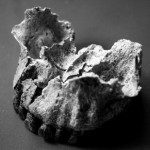
Author describes specimen as "complete maxilla with all teeth and lower face of adult".�Specimen is pictured in images 1-11. (Images from R. Clarke 2011). |
|
|
|
Yes |
|
Mammalia |
Primates |
Anthropoidea |
Haplorhini |
Hominoidea |
Hominidae |
Homininae |
Hominini |
Homo |
habilis |
|
Large habilis |
No |
 |
10 736 |
10180 |
7 - FLK North |
|
R-COR |
|
|
I |
Upper |
|
Brodkorb P., Mourer-Chauviré C. 1982. Fossil Anhingas (Aves: Anhingidae) from early man sites of Hadar and Omo (Ethiopia) and Olduvai Gorge (Tanzania). Geobios 15: 505-515 |
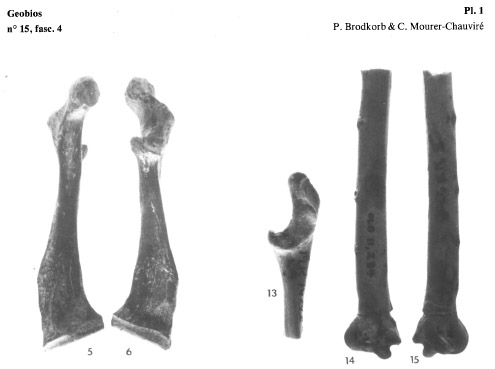
Right coracoid, almost complete expect for sternocoracoidal process and tip of procoracoid process. "Place of conservation of material : The fossils are currently on deposit at the University of Florida, Department of Zoology, and will later be returned to their countries of origin. The serial numbers such as 2780 are catalogue numbers of the Olduvai birds, and the data are kept at the University of Florida, Gainesville" (Brodkorb and Mourer-Chauvire, 1982:510). Specimen number does not match specimen pictured. It is possibly that there is a typo that erroneously listed the specimen pictured in figures 5 and 6. Figure description: "Right coracoid, 10 737, Lower Pleistocene, Frida Leakey Horongo, Olduvai Gorge, Tanzania. (5) anterior view. (6) posterior view" (Brodkorb and Mourer-Chauvire, 1982). |
|
|
264 - Leakey family expedition |
Unknown |
|
Aves |
Suliformes |
|
|
|
Anhingidae |
|
|
Anhinga |
hadarensis |
|
|
No |
|
2870 |
10181 |
6 - FLK NN |
|
R-COR-f |
|
|
I |
Lower |
Layer 4 |
Brodkorb P., Mourer-Chauviré C. 1982. Fossil Anhingas (Aves: Anhingidae) from early man sites of Hadar and Omo (Ethiopia) and Olduvai Gorge (Tanzania). Geobios 15: 505-515 |
Upper half of right coracoid lacking head. "Place of conservation of material : The fossils are currently on deposit at the University of Florida, Department of Zoology, and will later be returned to their countries of origin. The serial numbers such as 2780 are catalogue numbers of the Olduvai birds, and the data are kept at the University of Florida, Gainesville" (Brodkorb and Mourer-Chauvire, 1982:510). Specimen number does not match specimen pictured. It is possible that there is a typo that erroneously lists the specimen pictured in figures 5 and 6. Figure description: "Upper half of right coracoid, 2870, Lower Pleistocene, Frida Leakey Korongo, Olduvai Gorge, Tanzania, posterior view." (Brodkorb and Mourer-Chauvire, 1982). |
|
|
264 - Leakey family expedition |
Unknown |
|
Aves |
Suliformes |
|
|
|
Anhingidae |
|
|
Anhinga |
hadarensis |
|
|
No |
|
11 234 |
10182 |
58 - KK |
|
L-ULNA-f |
|
|
II |
"Probably lower middle" (Brodkorb and Mourer-Chauvire, 1982:510). |
|
Brodkorb P., Mourer-Chauviré C. 1982. Fossil Anhingas (Aves: Anhingidae) from early man sites of Hadar and Omo (Ethiopia) and Olduvai Gorge (Tanzania). Geobios 15: 505-515 |
Distal half of left ulna. "Place of conservation of material : The fossils are currently on deposit at the University of Florida, Department of Zoology, and will later be returned to their countries of origin. The serial numbers such as 2780 are catalogue numbers of the Olduvai birds, and the data are kept at the University of Florida, Gainesville" (Brodkorb and Mourer-Chauvire, 1982:510). Figure description: "Fig. 14 - 15 -- Distal half of left ulna, 11 234, Lower Pleistocene, Kudu Korongo, Olduvai Gorge, Tanzania. (14) internal view. (15) external view." (Brodkorb and Mourer-Chauvire, 1982). |
|
|
264 - Leakey family expedition |
Unknown |
|
Aves |
Suliformes |
|
|
|
Anhingidae |
|
|
Anhinga |
hadarensis |
|
|
No |
 |
OLD 15802 |
10155 |
|
|
L-COR |
|
|
I |
|
Layer 3 |
Brodkorb P., Mourer-Chauviré, C. 1984. Fossil owls from early man sites of Olduvai Gorge, Tanzania. Ostrich; Journal of African Ornithology 55:17-27. |
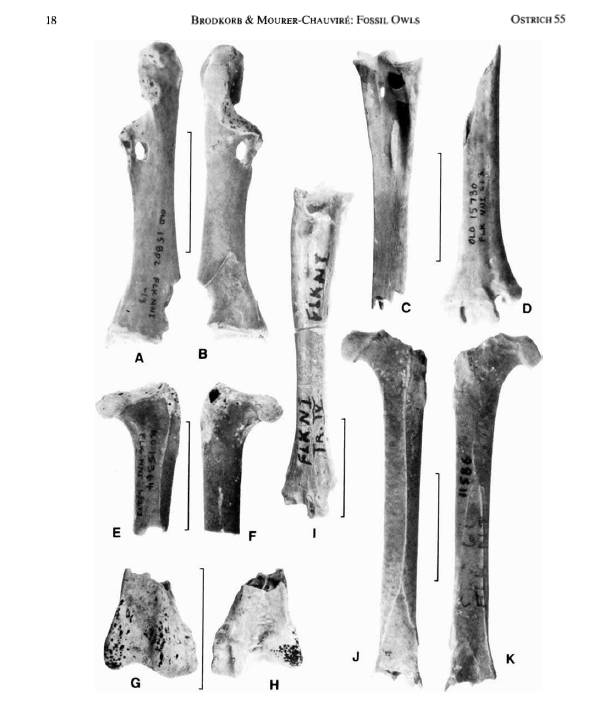
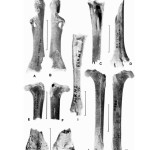
HOLOTYPE. "Left coracoid lacking the procoracoid and the external distal angle... Paratypes: The following specimens are from layer 3 of locality FLK NNI and can be attributed to the same individual as the holotype: 15740, premaxillae; 3301, lower part of right coracoid. 15364 and 15473, proximal and distal parts of left femur; 16377, distal part of right femur; 15701, distal part of left tibiotarsus; 15776, left fibula; 16262, proximal part of right tarsometatarsus; 15730, distal part of left tarsometatarsus; 15942, 15946, 16050, 16171, 16174, 16176 to 16180, pedal phalanges. Place of conservation of the material: The fossils are currently on deposit at the University of Florida, Department of Zoology, and will later be returned to Tanzania" (Brodkorb and Mourer-Chauvire, 1984:17, 19). Image notes: (Scale = 2 cm) A-B: Left coracoid, holotype, OLD 15802, FLK NNI, layer 3, A anterior face, B posterior face. C: Right tarsometatarsus, proximal part, paratype, OLD 16262, FLK NNI, scree, anterior face. D: Left tarsometatarsus, distal part, paratype, OLD 15730, FLK NNI, layer 3, anterior face. E-F: Left femur, proximal half, paratype, OLD 15364, FLK NNI, layer 2+3, E anterior face, F POSterior face. G-H: Left femur, distal part, paratype, OLD 15473, FLK NNI, layer 3, G anterior face, H posterior face. I: Left tarsometatarsus, almost complete, OLD 11574, FLK NI, layer 1, anterior face. J-K: Left femur, lacking the distal part, OLD 11586, FLK NI, layer 2, J anterior face, K posterior face. |
|
|
|
Unknown |
|
Aves |
Strigiformes |
|
|
|
Strigidae |
|
|
Bubo |
leakeyae |
|
|
No |
|
OLD 15740 |
10156 |
6 - FLK NN |
|
PMAX |
|
|
I |
|
Layer 3 |
Brodkorb P., Mourer-Chauviré, C. 1984. Fossil owls from early man sites of Olduvai Gorge, Tanzania. Ostrich; Journal of African Ornithology 55:17-27. |
PARATYPE. "Paratypes: The following specimens are from layer 3 of locality FLK NNI and can be attributed to the same individual as the holotype: 15740, premaxillae; 3301, lower part of right coracoid. 15364 and 15473, proximal and distal parts of left femur; 16377, distal part of right femur; 15701, distal part of left tibiotarsus; 15776, left fibula; 16262, proximal part of right tarsometatarsus; 15730, distal part of left tarsometatarsus; 15942, 15946, 16050, 16171, 16174, 16176 to 16180, pedal phalanges. Place of conservation of the material: The fossils are currently on deposit at the University of Florida, Department of Zoology, and will later be returned to Tanzania" (Brodkorb and Mourer-Chauvire, 1984:17, 19). Image notes: (Scale = 2 cm) A-B: Left coracoid, holotype, OLD 15802, FLK NNI, layer 3, A anterior face, B posterior face. C: Right tarsometatarsus, proximal part, paratype, OLD 16262, FLK NNI, scree, anterior face. D: Left tarsometatarsus, distal part, paratype, OLD 15730, FLK NNI, layer 3, anterior face. E-F: Left femur, proximal half, paratype, OLD 15364, FLK NNI, layer 2+3, E anterior face, F POSterior face. G-H: Left femur, distal part, paratype, OLD 15473, FLK NNI, layer 3, G anterior face, H posterior face. I: Left tarsometatarsus, almost complete, OLD 11574, FLK NI, layer 1, anterior face. J-K: Left femur, lacking the distal part, OLD 11586, FLK NI, layer 2, J anterior face, K posterior face. |
|
|
|
Unknown |
|
Aves |
Strigiformes |
|
|
|
Strigidae |
|
|
Bubo |
leakeyae |
|
|
No |
|
OLD 3301 |
10157 |
6 - FLK NN |
|
R-COR-f |
|
|
I |
|
Layer 3 |
Brodkorb P., Mourer-Chauviré, C. 1984. Fossil owls from early man sites of Olduvai Gorge, Tanzania. Ostrich; Journal of African Ornithology 55:17-27. |
PARATYPE. "Paratypes: The following specimens are from layer 3 of locality FLK NNI and can be attributed to the same individual as the holotype: 15740, premaxillae; 3301, lower part of right coracoid. 15364 and 15473, proximal and distal parts of left femur; 16377, distal part of right femur; 15701, distal part of left tibiotarsus; 15776, left fibula; 16262, proximal part of right tarsometatarsus; 15730, distal part of left tarsometatarsus; 15942, 15946, 16050, 16171, 16174, 16176 to 16180, pedal phalanges. Place of conservation of the material: The fossils are currently on deposit at the University of Florida, Department of Zoology, and will later be returned to Tanzania" (Brodkorb and Mourer-Chauvire, 1984:17, 19). Image notes: (Scale = 2 cm) A-B: Left coracoid, holotype, OLD 15802, FLK NNI, layer 3, A anterior face, B posterior face. C: Right tarsometatarsus, proximal part, paratype, OLD 16262, FLK NNI, scree, anterior face. D: Left tarsometatarsus, distal part, paratype, OLD 15730, FLK NNI, layer 3, anterior face. E-F: Left femur, proximal half, paratype, OLD 15364, FLK NNI, layer 2+3, E anterior face, F POSterior face. G-H: Left femur, distal part, paratype, OLD 15473, FLK NNI, layer 3, G anterior face, H posterior face. I: Left tarsometatarsus, almost complete, OLD 11574, FLK NI, layer 1, anterior face. J-K: Left femur, lacking the distal part, OLD 11586, FLK NI, layer 2, J anterior face, K posterior face. |
|
|
|
Unknown |
|
Aves |
Strigiformes |
|
|
|
Strigidae |
|
|
Bubo |
leakeyae |
|
|
No |
|
OLD 15473 |
10158 |
6 - FLK NN |
|
L-FEM |
|
|
I |
|
Layer 3 |
Brodkorb P., Mourer-Chauviré, C. 1984. Fossil owls from early man sites of Olduvai Gorge, Tanzania. Ostrich; Journal of African Ornithology 55:17-27. |
PARATYPE. OLD 15364 and OLD 15473 are "proximal and distal parts of left femur" (Brodkorb and Mourer-Chauvire, 1984:17). "Paratypes: The following specimens are from layer 3 of locality FLK NNI and can be attributed to the same individual as the holotype: 15740, premaxillae; 3301, lower part of right coracoid. 15364 and 15473, proximal and distal parts of left femur; 16377, distal part of right femur; 15701, distal part of left tibiotarsus; 15776, left fibula; 16262, proximal part of right tarsometatarsus; 15730, distal part of left tarsometatarsus; 15942, 15946, 16050, 16171, 16174, 16176 to 16180, pedal phalanges. Place of conservation of the material: The fossils are currently on deposit at the University of Florida, Department of Zoology, and will later be returned to Tanzania" (Brodkorb and Mourer-Chauvire, 1984:17, 19). Image notes: (Scale = 2 cm) A-B: Left coracoid, holotype, OLD 15802, FLK NNI, layer 3, A anterior face, B posterior face. C: Right tarsometatarsus, proximal part, paratype, OLD 16262, FLK NNI, scree, anterior face. D: Left tarsometatarsus, distal part, paratype, OLD 15730, FLK NNI, layer 3, anterior face. E-F: Left femur, proximal half, paratype, OLD 15364, FLK NNI, layer 2+3, E anterior face, F Posterior face. G-H: Left femur, distal part, paratype, OLD 15473, FLK NNI, layer 3, G anterior face, H posterior face. I: Left tarsometatarsus, almost complete, OLD 11574, FLK NI, layer 1, anterior face. J-K: Left femur, lacking the distal part, OLD 11586, FLK NI, layer 2, J anterior face, K posterior face. |
|
|
|
Unknown |
|
Aves |
Strigiformes |
|
|
|
Strigidae |
|
|
Bubo |
leakeyae |
|
|
No |
|
OLD 16262 |
10159 |
6 - FLK NN |
|
R-TARMET-f |
|
|
I |
|
Layer 3 scree |
Brodkorb P., Mourer-Chauviré, C. 1984. Fossil owls from early man sites of Olduvai Gorge, Tanzania. Ostrich; Journal of African Ornithology 55:17-27. |
PARATYPE. "Paratypes: The following specimens are from layer 3 of locality FLK NNI and can be attributed to the same individual as the holotype: 15740, premaxillae; 3301, lower part of right coracoid. 15364 and 15473, proximal and distal parts of left femur; 16377, distal part of right femur; 15701, distal part of left tibiotarsus; 15776, left fibula; 16262, proximal part of right tarsometatarsus; 15730, distal part of left tarsometatarsus; 15942, 15946, 16050, 16171, 16174, 16176 to 16180, pedal phalanges. Place of conservation of the material: The fossils are currently on deposit at the University of Florida, Department of Zoology, and will later be returned to Tanzania" (Brodkorb and Mourer-Chauvire, 1984:17, 19). Image notes: (Scale = 2 cm) A-B: Left coracoid, holotype, OLD 15802, FLK NNI, layer 3, A anterior face, B posterior face. C: Right tarsometatarsus, proximal part, paratype, OLD 16262, FLK NNI, scree, anterior face. D: Left tarsometatarsus, distal part, paratype, OLD 15730, FLK NNI, layer 3, anterior face. E-F: Left femur, proximal half, paratype, OLD 15364, FLK NNI, layer 2+3, E anterior face, F Posterior face. G-H: Left femur, distal part, paratype, OLD 15473, FLK NNI, layer 3, G anterior face, H posterior face. I: Left tarsometatarsus, almost complete, OLD 11574, FLK NI, layer 1, anterior face. J-K: Left femur, lacking the distal part, OLD 11586, FLK NI, layer 2, J anterior face, K posterior face. |
|
|
|
Unknown |
|
Aves |
Strigiformes |
|
|
|
Strigidae |
|
|
Bubo |
leakeyae |
|
|
No |
|
OLD 16377 |
10160 |
6 - FLK NN |
|
R-FEM-f |
|
|
I |
|
Layer 3 scree |
Brodkorb P., Mourer-Chauviré, C. 1984. Fossil owls from early man sites of Olduvai Gorge, Tanzania. Ostrich; Journal of African Ornithology 55:17-27. |
PARATYPE. Distal portion of right femur. "Paratypes: The following specimens are from layer 3 of locality FLK NNI and can be attributed to the same individual as the holotype: 15740, premaxillae; 3301, lower part of right coracoid. 15364 and 15473, proximal and distal parts of left femur; 16377, distal part of right femur; 15701, distal part of left tibiotarsus; 15776, left fibula; 16262, proximal part of right tarsometatarsus; 15730, distal part of left tarsometatarsus; 15942, 15946, 16050, 16171, 16174, 16176 to 16180, pedal phalanges. Place of conservation of the material: The fossils are currently on deposit at the University of Florida, Department of Zoology, and will later be returned to Tanzania" (Brodkorb and Mourer-Chauvire, 1984:17, 19). Image notes: (Scale = 2 cm) A-B: Left coracoid, holotype, OLD 15802, FLK NNI, layer 3, A anterior face, B posterior face. C: Right tarsometatarsus, proximal part, paratype, OLD 16262, FLK NNI, scree, anterior face. D: Left tarsometatarsus, distal part, paratype, OLD 15730, FLK NNI, layer 3, anterior face. E-F: Left femur, proximal half, paratype, OLD 15364, FLK NNI, layer 2+3, E anterior face, F Posterior face. G-H: Left femur, distal part, paratype, OLD 15473, FLK NNI, layer 3, G anterior face, H posterior face. I: Left tarsometatarsus, almost complete, OLD 11574, FLK NI, layer 1, anterior face. J-K: Left femur, lacking the distal part, OLD 11586, FLK NI, layer 2, J anterior face, K posterior face. |
|
|
|
Unknown |
|
Aves |
Strigiformes |
|
|
|
Strigidae |
|
|
Bubo |
leakeyae |
|
|
No |
|
OLD 15701 |
10161 |
6 - FLK NN |
|
L-TBT-f |
|
|
I |
|
Layer 3 scree |
Brodkorb P., Mourer-Chauviré, C. 1984. Fossil owls from early man sites of Olduvai Gorge, Tanzania. Ostrich; Journal of African Ornithology 55:17-27. |
PARATYPE. Distal portion of left tibiotarsus. "Paratypes: The following specimens are from layer 3 of locality FLK NNI and can be attributed to the same individual as the holotype: 15740, premaxillae; 3301, lower part of right coracoid. 15364 and 15473, proximal and distal parts of left femur; 16377, distal part of right femur; 15701, distal part of left tibiotarsus; 15776, left fibula; 16262, proximal part of right tarsometatarsus; 15730, distal part of left tarsometatarsus; 15942, 15946, 16050, 16171, 16174, 16176 to 16180, pedal phalanges. Place of conservation of the material: The fossils are currently on deposit at the University of Florida, Department of Zoology, and will later be returned to Tanzania" (Brodkorb and Mourer-Chauvire, 1984:17, 19). Image notes: (Scale = 2 cm) A-B: Left coracoid, holotype, OLD 15802, FLK NNI, layer 3, A anterior face, B posterior face. C: Right tarsometatarsus, proximal part, paratype, OLD 16262, FLK NNI, scree, anterior face. D: Left tarsometatarsus, distal part, paratype, OLD 15730, FLK NNI, layer 3, anterior face. E-F: Left femur, proximal half, paratype, OLD 15364, FLK NNI, layer 2+3, E anterior face, F Posterior face. G-H: Left femur, distal part, paratype, OLD 15473, FLK NNI, layer 3, G anterior face, H posterior face. I: Left tarsometatarsus, almost complete, OLD 11574, FLK NI, layer 1, anterior face. J-K: Left femur, lacking the distal part, OLD 11586, FLK NI, layer 2, J anterior face, K posterior face. |
|
|
|
Unknown |
|
Aves |
Strigiformes |
|
|
|
Strigidae |
|
|
Bubo |
leakeyae |
|
|
No |
|
OLD 15776 |
10162 |
6 - FLK NN |
|
L-FIB |
|
|
I |
|
Layer 3 scree |
Brodkorb P., Mourer-Chauviré, C. 1984. Fossil owls from early man sites of Olduvai Gorge, Tanzania. Ostrich; Journal of African Ornithology 55:17-27. |
PARATYPE. "Paratypes: The following specimens are from layer 3 of locality FLK NNI and can be attributed to the same individual as the holotype: 15740, premaxillae; 3301, lower part of right coracoid. 15364 and 15473, proximal and distal parts of left femur; 16377, distal part of right femur; 15701, distal part of left tibiotarsus; 15776, left fibula; 16262, proximal part of right tarsometatarsus; 15730, distal part of left tarsometatarsus; 15942, 15946, 16050, 16171, 16174, 16176 to 16180, pedal phalanges. Place of conservation of the material: The fossils are currently on deposit at the University of Florida, Department of Zoology, and will later be returned to Tanzania" (Brodkorb and Mourer-Chauvire, 1984:17, 19). Image notes: (Scale = 2 cm) A-B: Left coracoid, holotype, OLD 15802, FLK NNI, layer 3, A anterior face, B posterior face. C: Right tarsometatarsus, proximal part, paratype, OLD 16262, FLK NNI, scree, anterior face. D: Left tarsometatarsus, distal part, paratype, OLD 15730, FLK NNI, layer 3, anterior face. E-F: Left femur, proximal half, paratype, OLD 15364, FLK NNI, layer 2+3, E anterior face, F Posterior face. G-H: Left femur, distal part, paratype, OLD 15473, FLK NNI, layer 3, G anterior face, H posterior face. I: Left tarsometatarsus, almost complete, OLD 11574, FLK NI, layer 1, anterior face. J-K: Left femur, lacking the distal part, OLD 11586, FLK NI, layer 2, J anterior face, K posterior face. |
|
|
|
Unknown |
|
Aves |
Strigiformes |
|
|
|
Strigidae |
|
|
Bubo |
leakeyae |
|
|
No |
|
OLD 15730 |
10163 |
6 - FLK NN |
|
L-TARMET-f |
|
|
I |
|
Layer 3 scree |
Brodkorb P., Mourer-Chauviré, C. 1984. Fossil owls from early man sites of Olduvai Gorge, Tanzania. Ostrich; Journal of African Ornithology 55:17-27. |
PARATYPE. Distal portion of left tarsometatarsus. "Paratypes: The following specimens are from layer 3 of locality FLK NNI and can be attributed to the same individual as the holotype: 15740, premaxillae; 3301, lower part of right coracoid. 15364 and 15473, proximal and distal parts of left femur; 16377, distal part of right femur; 15701, distal part of left tibiotarsus; 15776, left fibula; 16262, proximal part of right tarsometatarsus; 15730, distal part of left tarsometatarsus; 15942, 15946, 16050, 16171, 16174, 16176 to 16180, pedal phalanges. Place of conservation of the material: The fossils are currently on deposit at the University of Florida, Department of Zoology, and will later be returned to Tanzania" (Brodkorb and Mourer-Chauvire, 1984:17, 19). Image notes: (Scale = 2 cm) A-B: Left coracoid, holotype, OLD 15802, FLK NNI, layer 3, A anterior face, B posterior face. C: Right tarsometatarsus, proximal part, paratype, OLD 16262, FLK NNI, scree, anterior face. D: Left tarsometatarsus, distal part, paratype, OLD 15730, FLK NNI, layer 3, anterior face. E-F: Left femur, proximal half, paratype, OLD 15364, FLK NNI, layer 2+3, E anterior face, F Posterior face. G-H: Left femur, distal part, paratype, OLD 15473, FLK NNI, layer 3, G anterior face, H posterior face. I: Left tarsometatarsus, almost complete, OLD 11574, FLK NI, layer 1, anterior face. J-K: Left femur, lacking the distal part, OLD 11586, FLK NI, layer 2, J anterior face, K posterior face. |
|
|
|
Unknown |
|
Aves |
Strigiformes |
|
|
|
Strigidae |
|
|
Bubo |
leakeyae |
|
|
No |
|
OLD 15942 |
10164 |
6 - FLK NN |
|
PHX |
|
|
I |
|
Layer 3 scree |
Brodkorb P., Mourer-Chauviré, C. 1984. Fossil owls from early man sites of Olduvai Gorge, Tanzania. Ostrich; Journal of African Ornithology 55:17-27. |
PARATYPE. Pedal phalanx. Distal portion of left tarsometatarsus. "Paratypes: The following specimens are from layer 3 of locality FLK NNI and can be attributed to the same individual as the holotype: 15740, premaxillae; 3301, lower part of right coracoid. 15364 and 15473, proximal and distal parts of left femur; 16377, distal part of right femur; 15701, distal part of left tibiotarsus; 15776, left fibula; 16262, proximal part of right tarsometatarsus; 15730, distal part of left tarsometatarsus; 15942, 15946, 16050, 16171, 16174, 16176 to 16180, pedal phalanges. Place of conservation of the material: The fossils are currently on deposit at the University of Florida, Department of Zoology, and will later be returned to Tanzania" (Brodkorb and Mourer-Chauvire, 1984:17, 19). Image notes: (Scale = 2 cm) A-B: Left coracoid, holotype, OLD 15802, FLK NNI, layer 3, A anterior face, B posterior face. C: Right tarsometatarsus, proximal part, paratype, OLD 16262, FLK NNI, scree, anterior face. D: Left tarsometatarsus, distal part, paratype, OLD 15730, FLK NNI, layer 3, anterior face. E-F: Left femur, proximal half, paratype, OLD 15364, FLK NNI, layer 2+3, E anterior face, F Posterior face. G-H: Left femur, distal part, paratype, OLD 15473, FLK NNI, layer 3, G anterior face, H posterior face. I: Left tarsometatarsus, almost complete, OLD 11574, FLK NI, layer 1, anterior face. J-K: Left femur, lacking the distal part, OLD 11586, FLK NI, layer 2, J anterior face, K posterior face. |
|
|
|
Unknown |
|
Aves |
Strigiformes |
|
|
|
Strigidae |
|
|
Bubo |
leakeyae |
|
|
No |
|
OLD 15946 |
10165 |
6 - FLK NN |
|
PHX |
|
|
I |
|
Layer 3 scree |
Brodkorb P., Mourer-Chauviré, C. 1984. Fossil owls from early man sites of Olduvai Gorge, Tanzania. Ostrich; Journal of African Ornithology 55:17-27. |
PARATYPE. Pedal phalanx. Distal portion of left tarsometatarsus. "Paratypes: The following specimens are from layer 3 of locality FLK NNI and can be attributed to the same individual as the holotype: 15740, premaxillae; 3301, lower part of right coracoid. 15364 and 15473, proximal and distal parts of left femur; 16377, distal part of right femur; 15701, distal part of left tibiotarsus; 15776, left fibula; 16262, proximal part of right tarsometatarsus; 15730, distal part of left tarsometatarsus; 15942, 15946, 16050, 16171, 16174, 16176 to 16180, pedal phalanges. Place of conservation of the material: The fossils are currently on deposit at the University of Florida, Department of Zoology, and will later be returned to Tanzania" (Brodkorb and Mourer-Chauvire, 1984:17, 19). Image notes: (Scale = 2 cm) A-B: Left coracoid, holotype, OLD 15802, FLK NNI, layer 3, A anterior face, B posterior face. C: Right tarsometatarsus, proximal part, paratype, OLD 16262, FLK NNI, scree, anterior face. D: Left tarsometatarsus, distal part, paratype, OLD 15730, FLK NNI, layer 3, anterior face. E-F: Left femur, proximal half, paratype, OLD 15364, FLK NNI, layer 2+3, E anterior face, F Posterior face. G-H: Left femur, distal part, paratype, OLD 15473, FLK NNI, layer 3, G anterior face, H posterior face. I: Left tarsometatarsus, almost complete, OLD 11574, FLK NI, layer 1, anterior face. J-K: Left femur, lacking the distal part, OLD 11586, FLK NI, layer 2, J anterior face, K posterior face. |
|
|
|
Unknown |
|
Aves |
Strigiformes |
|
|
|
Strigidae |
|
|
Bubo |
leakeyae |
|
|
No |
|
OLD 16050 |
10166 |
6 - FLK NN |
|
PHX |
|
|
I |
|
Layer 3 scree |
Brodkorb P., Mourer-Chauviré, C. 1984. Fossil owls from early man sites of Olduvai Gorge, Tanzania. Ostrich; Journal of African Ornithology 55:17-27. |
PARATYPE. Pedal phalanx. Distal portion of left tarsometatarsus. "Paratypes: The following specimens are from layer 3 of locality FLK NNI and can be attributed to the same individual as the holotype: 15740, premaxillae; 3301, lower part of right coracoid. 15364 and 15473, proximal and distal parts of left femur; 16377, distal part of right femur; 15701, distal part of left tibiotarsus; 15776, left fibula; 16262, proximal part of right tarsometatarsus; 15730, distal part of left tarsometatarsus; 15942, 15946, 16050, 16171, 16174, 16176 to 16180, pedal phalanges. Place of conservation of the material: The fossils are currently on deposit at the University of Florida, Department of Zoology, and will later be returned to Tanzania" (Brodkorb and Mourer-Chauvire, 1984:17, 19). Image notes: (Scale = 2 cm) A-B: Left coracoid, holotype, OLD 15802, FLK NNI, layer 3, A anterior face, B posterior face. C: Right tarsometatarsus, proximal part, paratype, OLD 16262, FLK NNI, scree, anterior face. D: Left tarsometatarsus, distal part, paratype, OLD 15730, FLK NNI, layer 3, anterior face. E-F: Left femur, proximal half, paratype, OLD 15364, FLK NNI, layer 2+3, E anterior face, F Posterior face. G-H: Left femur, distal part, paratype, OLD 15473, FLK NNI, layer 3, G anterior face, H posterior face. I: Left tarsometatarsus, almost complete, OLD 11574, FLK NI, layer 1, anterior face. J-K: Left femur, lacking the distal part, OLD 11586, FLK NI, layer 2, J anterior face, K posterior face. |
|
|
|
Unknown |
|
Aves |
Strigiformes |
|
|
|
Strigidae |
|
|
Bubo |
leakeyae |
|
|
No |
|
OLD 16171 |
10167 |
6 - FLK NN |
|
PHX |
|
|
I |
|
Layer 3 scree |
Brodkorb P., Mourer-Chauviré, C. 1984. Fossil owls from early man sites of Olduvai Gorge, Tanzania. Ostrich; Journal of African Ornithology 55:17-27. |
PARATYPE. Pedal phalanx. Distal portion of left tarsometatarsus. "Paratypes: The following specimens are from layer 3 of locality FLK NNI and can be attributed to the same individual as the holotype: 15740, premaxillae; 3301, lower part of right coracoid. 15364 and 15473, proximal and distal parts of left femur; 16377, distal part of right femur; 15701, distal part of left tibiotarsus; 15776, left fibula; 16262, proximal part of right tarsometatarsus; 15730, distal part of left tarsometatarsus; 15942, 15946, 16050, 16171, 16174, 16176 to 16180, pedal phalanges. Place of conservation of the material: The fossils are currently on deposit at the University of Florida, Department of Zoology, and will later be returned to Tanzania" (Brodkorb and Mourer-Chauvire, 1984:17, 19). Image notes: (Scale = 2 cm) A-B: Left coracoid, holotype, OLD 15802, FLK NNI, layer 3, A anterior face, B posterior face. C: Right tarsometatarsus, proximal part, paratype, OLD 16262, FLK NNI, scree, anterior face. D: Left tarsometatarsus, distal part, paratype, OLD 15730, FLK NNI, layer 3, anterior face. E-F: Left femur, proximal half, paratype, OLD 15364, FLK NNI, layer 2+3, E anterior face, F Posterior face. G-H: Left femur, distal part, paratype, OLD 15473, FLK NNI, layer 3, G anterior face, H posterior face. I: Left tarsometatarsus, almost complete, OLD 11574, FLK NI, layer 1, anterior face. J-K: Left femur, lacking the distal part, OLD 11586, FLK NI, layer 2, J anterior face, K posterior face. |
|
|
|
Unknown |
|
Aves |
Strigiformes |
|
|
|
Strigidae |
|
|
Bubo |
leakeyae |
|
|
No |